Community
Open Science, Mentorship & Opportunities
Imaging spectroscopy data can present real barriers to entry. The files are large, the formats are unfamiliar, the atmospheric corrections are subtle, and the researchers who hold the ecological and geological questions are often not the people who know how to open the data.
Reducing those barriers is a substantial component of my work. It takes three forms: building the shared databases that retrieval algorithms are developed and validated against, producing the tutorials and software that allow new users to reach a first result, and publishing the data from every campaign I lead, field measurements included, in repositories where they can be found and cited.
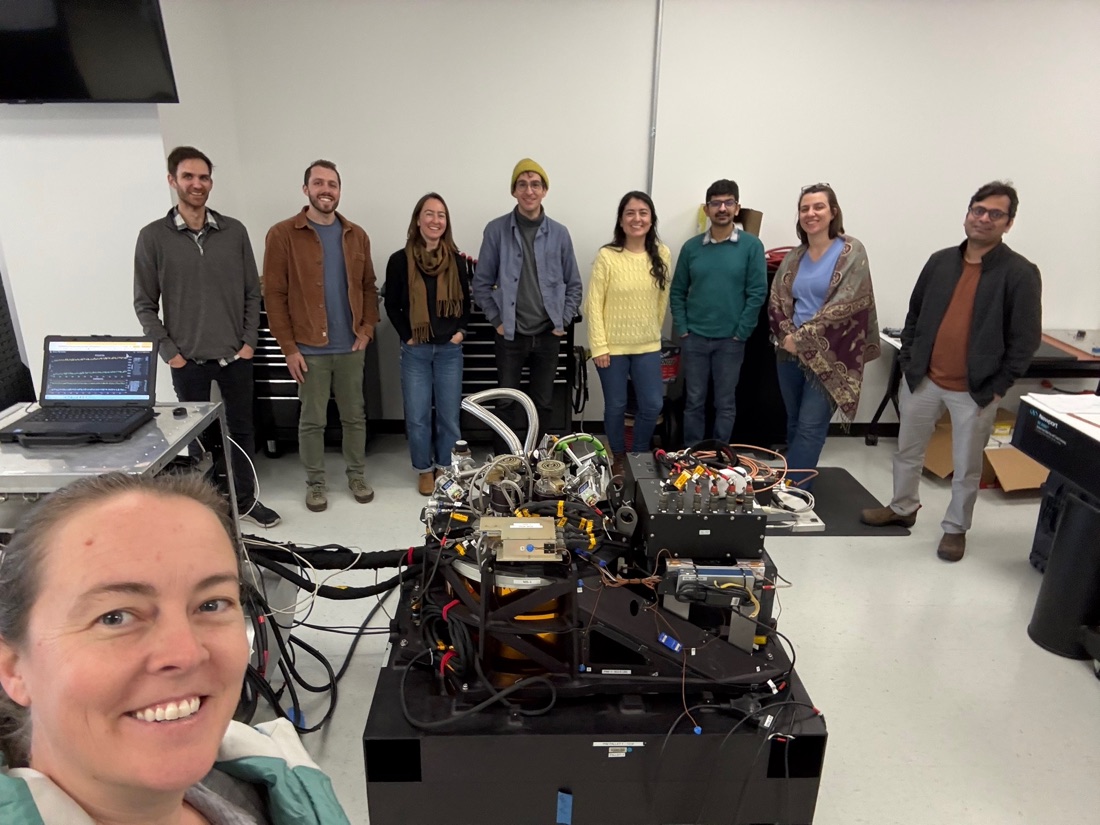
The same principle applies to people. Campaigns are conducted by teams, and I have found that bringing new researchers into this work, and giving them substantive responsibility within it, is the most effective way to sustain the field.
Opportunities
Open Positions
I currently have two open NASA Postdoctoral Program positions at the Jet Propulsion Laboratory, both in Earth Science, with applications due November 1, 2026. NPP fellowships are open to recent PhD recipients and are administered through ORAU. I am the advisor on both opportunities.
If either of these directions is of interest, or if you are uncertain whether your background is a good fit, please get in touch before applying. I am always glad to discuss the work.
Terrestrial Ecology, Wildfire Fuel Monitoring & Agricultural Applications
This opportunity uses VSWIR imaging spectroscopy to examine terrestrial ecosystem function, biodiversity, precision agriculture, wildfire risk assessment, and biogeochemical cycling. Research directions include mapping plant biochemistry, analyzing crop physiological status, and investigating carbon and nutrient fluxes. The work draws on NASA's imaging spectroscopy archives, including AVIRIS airborne collections and EMIT aboard the International Space Station, with the potential to contribute to future global missions.
Imaging Spectroscopy for Tropical Ecosystem & Biogeochemical Research
This opportunity advances imaging spectroscopy methods for the study of tropical ecosystems, integrating satellite and airborne data with topographic models to examine plant traits, soil properties, landscape evolution, and agricultural systems. Methods include algorithm development, machine learning, and data-model integration in support of a better understanding of biogeochemical cycling and ecosystem dynamics. The work connects closely to the PANGEA science definition effort.
Beyond the NPP, I regularly host students through JPL's Maximizing Student Potential in STEM and Year Round Internship programs, the Caltech SURF program, and JPL's Strategic University Research Partnerships. These cycles run throughout the year, so students interested in this work are welcome to write at any time.
Databases, software & data
Open Science Contributions
The efforts below are aimed at making imaging spectroscopy data usable by researchers who did not participate in collecting them.
VSWIR-PLANTS
Lead, 2025–present.
Every foliar trait map rests on a pile of measured leaves. VSWIR-PLANTS is an open database of plant traits and spectra pooled across campaigns, developed so that foliar trait retrieval algorithms for EAGLE-VSWIR can be built and validated against a consistent, versioned record rather than a collection of individual datasets. The effort was previously known as SBG-PLANTS and was first presented at AGU in 2024. It is developed openly with directed funding from NASA Terrestrial Ecology.
VITALS
Contributor.
VSWIR Imaging and TIR Applications, Learning, and Science is a collection of Python notebooks demonstrating how to locate concurrent EMIT and ECOSTRESS scenes and analyze them jointly, with worked examples on invasive plant species and agricultural health. Reflectance and thermal measurements address different questions, and VITALS supports the integration of the two.
EMIT Data Tutorial Series
Organizer, 2023–2025.
A three-part series developed with the Land Processes DAAC and the EMIT science team, covering mission and data fundamentals, basic data operations, and more advanced work with EMIT reflectance data. Recordings and notebooks are openly available, and the community continues to contribute to the materials.
Published Datasets
Every campaign I have led has published its data, including foliar chemistry, leaf traits, soil bulk density and texture, species cover, field spectra, radiance and reflectance mosaics, lidar products, and metagenome-assembled genomes. Twenty-two datasets are published to date through the ORNL DAAC and the ESS-DIVE repository, each with a citable DOI.
Data Stewardship & Standards
I currently chair the Oak Ridge DAAC User Working Group. I have been a member of NEON's Airborne Sampling Design Technical Working Group since 2018 and served on its Foliar Sampling Technical Working Group from 2017 to 2025. I am also a co-author on community work defining sample identifiers and metadata standards for multidisciplinary ecosystem science.
Training & Workshops
Guest instructor for SpecSchool, run by Kyla Dahlin at Michigan State University, and for NASA's Applied Remote Sensing Training program on methane emission detection. I led an AGU learning workshop on applying ECOSTRESS and EMIT data to ecological problems, and participated in an ESA workshop on working with NASA remote sensing data in the cloud using open source software.
People
Mentorship
Much of what I have learned has come from working alongside people both earlier and later in their careers than I am. I have mentored postdoctoral researchers, graduate students, and more than fifteen undergraduates through the NASA Postdoctoral Program, JPL's Maximizing Student Potential in STEM and Year Round Internship programs, the Caltech SURF program, NASA FINESST and Puerto Rico Space Grant fellowships, and Stanford's undergraduate research programs.
I serve on graduate committees at several universities and sit on NASA ROSES review panels. I am an advisory review board member for the SPACES Institute at Cal Poly Pomona and represent NASA's Earth Science Division on the board of CASERM, an NSF Industry-University Cooperative Research Center focused on mining and reclamation.
A full list of mentees and a complete service record are available in my CV.
Programs
NASA Postdoctoral Program · NASA FINESST · NASA Puerto Rico Space Grant · JPL Maximizing Student Potential in STEM · JPL Year Round Internship Program · JPL Strategic University Research Partnerships · Caltech SURF · Stanford SESUR
Home Institutions of Mentees
UCLA, UC Santa Barbara, UC Berkeley, Caltech, Cornell University, University of Wisconsin-Madison, University of Southern California, Boston University, University of Montana, University of Puerto Rico, UT Austin, Stanford University, Sonoma State University, Cal State Fullerton, Scripps, the Rocky Mountain Biological Laboratory, and Lawrence Berkeley National Laboratory.
Group Science & Teaching
I led the imaging spectroscopy summer intern group at JPL, supporting twelve students in weekly cross-center meetings, and organized the SBG cross-center summer postdoc and intern meetings. Earlier, I was co-instructor for EARTHSYS 111: Biology and Global Change at Stanford, and a teaching assistant for EARTHSYS 155: Science of Soils.